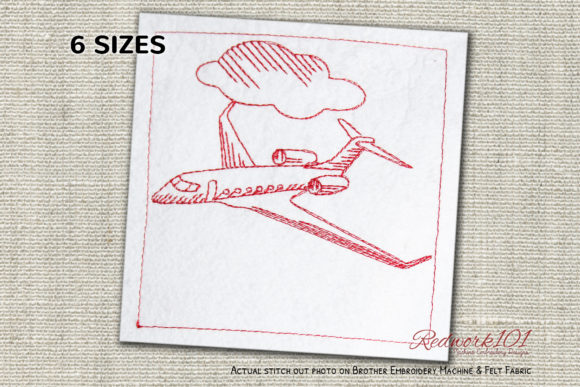
Gulfstream G500 Redwork: A Designer's Field Test
When I first pulled up the Gulfstream G500 Redwork file on my digitizing screen, I wasn't looking for flashiness. As someone who spends more time tweaking stitch paths than flying planes, I appreciate clean lines and practical execution. This design falls squarely into the Transportation category, but its real value lies in how it translates from a digital embroidery file to a tangible handmade product. Redwork, by definition, relies on a single thread color—usually a deep crimson or rust—against a neutral background. It is a style that demands precision because there are no dense fill stitches to hide wobbly lines or poor tension. After reviewing the layout and considering its application in a real-world embroidery project, here is my honest assessment of where this jet silhouette fits best in your craft business or personal collection.
The Aesthetic: Minimalist Aviation Elegance
The immediate impression of the Gulfstream G500 Redwork is one of sleek sophistication. Unlike complex applique design options that layer multiple fabrics, this piece uses a continuous line approach, likely utilizing a combination of running stitch for outlines and perhaps light fill stitch for specific details like windows or turbine intakes. The mood it creates is modern and professional. It doesn't scream "toy"; it whispers "luxury travel." This visual personality makes it an excellent candidate for clients who want subtle branding rather than loud graphics. For an Etsy seller specializing in nursery decor or executive gifts, this design offers a refined alternative to cartoonish vehicles. The lack of color variation means the focus remains entirely on the shape and proportion of the aircraft, which appears accurate to the real G500 model—a detail that aviation enthusiasts will definitely notice and appreciate.
Real-World Application: The Executive Tote Scenario
To truly test the viability of this design, I imagined a specific scenario: creating a custom tote bag design for a corporate retreat or a high-end travel agency giveaway. Picture a heavy canvas tote in a natural oatmeal or charcoal grey. Placing the Gulfstream G500 Redwork on the lower corner of the bag creates an instant association with premium travel. Because redwork is inherently less dense than a full satin column logo, it sits flatter against the fabric. This is crucial for tote bags that need to be folded or stuffed without the embroidery becoming bulky or distorting the bag's structure.
In this context, the design performs exceptionally well. The single-color scheme ensures that the thread colors contrast sharply against the canvas, making the jet recognizable even from a distance. If you are running a small shop product line focused on travel accessories, this design adds perceived value. It looks like a bespoke emblem rather than a mass-printed transfer. Furthermore, for commercial embroidery projects where turnaround time matters, the reduced stitch count typical of redwork styles means faster machine run times, allowing you to fulfill orders for custom apparel or merchandise more efficiently.
Fabric Considerations and Stitching Clarity
While the design is versatile, it is not universal. The success of Gulfstream G500 Redwork depends heavily on your choice of material. On smooth, tightly woven fabrics like broadcloth, denim, or canvas, the lines will remain crisp. However, caution is required when working with textured fabrics like thick terrycloth towels or fuzzy fleece sweatshirts. The fine details of the aircraft's tail or wingtips might get lost in the pile of the fabric. If you intend to use this for sweatshirt embroidery, I strongly recommend using a water-soluble topper stabilizer. This temporary layer bridges the gap between the needle and the fuzzy surface, ensuring the running stitch lays flat and visible.
Additionally, consider the stretch factor. If you are applying this to a knit baby embroidery item, such as a onesie, the lack of dense underlay in a redwork style means the design could distort if the fabric stretches significantly during wear. For infant clothing, keep the hoop size appropriate to the garment section to minimize pull, and always test on a scrap piece of the same knit first. The goal is to maintain the sleek profile of the Gulfstream without it warping into an unrecognizable shape after a few washes.
Navigating Technical Constraints
One specific note mentioned in the product details is that "The Box Stitch shown in picture is optional." This is a critical detail for designers. In many digital embroidery file packages, decorative borders are included as separate color stops. For the Gulfstream G500 Redwork, if you are stitching on a dark fabric, you might want to skip the outer box entirely to let the jet stand alone, or change that specific color stop to match your background if the box is meant to be a cut-out guide. Always review the stitch sequence in your machine software before loading the thread. Skipping unnecessary color changes saves time and reduces the risk of thread nests on the backside of your finished product.
Regarding hoop size, while exact dimensions aren't specified here, the elongated shape of a jet suggests you will need a rectangular hoop or a sufficiently large square hoop to accommodate the wingspan without re-hooping. Attempting to force this design into a small 4x4 hoop could result in cropping the wingtips, ruining the aerodynamic look. Always check the digitized dimensions against your available hoops. If you are working on curved surfaces like caps, ensure the design is centered correctly; the long horizontal nature of the plane works well across the front panel of a baseball cap, provided the curvature doesn't compress the image vertically.
Enhancing Brand Consistency and Customer Trust
For creative entrepreneurs, consistency is key to building trust. The Gulfstream G500 Redwork offers a consistent look across different mediums. Whether you are stitching it onto a pillow cover for a child's room, an apron for an aviation-themed kitchen, or a patch for a jacket, the redwork style ensures uniformity. There is no variance in shading or gradient interpretation; a red line is a red line. This reliability helps in creating cohesive design assets for your brand. When customers see the same clean, sharp jet logo on your packaging, your website mockups, and the actual product, it reinforces professionalism.
Moreover, the simplicity of the design lends itself well to printable mockup creation. Because it is essentially a line drawing, it overlays cleanly onto product photos in Photoshop or Canva, allowing you to showcase potential personalized gift options to clients before you even thread the needle. This visual clarity can boost buyer engagement, as customers can easily envision how the design will look on their specific item.
Final Verdict for Designers and Makers
The Gulfstream G500 Redwork is a solid, reliable addition to any transportation-themed library. It excels in scenarios where subtlety and speed are prioritized over heavy texture. It is particularly well-suited for holiday embroidery gifts for pilots, wedding gifts for couples who love to travel, or boutique branding for aviation consultants. However, it requires a thoughtful approach to fabric selection and stabilization. Do not assume it will work perfectly on every material without testing. Check the stitch density settings, verify the licensing terms for commercial use, and always run a test stitch-out on scrap fabric to confirm that the fine details of the G500 render clearly on your specific machine.
By treating this file with the respect it deserves—acknowledging its strengths in clean line work and its limitations on textured surfaces—you can create stunning, high-value items that resonate with aviation lovers and design aficionados alike. It is a reminder that sometimes, the most impactful embroidery project isn't the one with the most thread, but the one with the clearest vision.