Coconut with Half and Leaves Redwork Review
As an embroidery designer who has spent countless weekends setting up booths at local craft fairs and managing an online handmade shop, I know that the difference between a design that sits on the shelf and one that flies off the table often comes down to instant visual appeal and production practicality. When I pulled up the Coconut with Half and Leaves Redwork file to evaluate it for my upcoming market season, I was looking for more than just a cute image; I was looking for a versatile machine embroidery design that could anchor a cohesive collection of craft fair product offerings.
The first impression of this design is undeniably fresh and summery. The redwork style, characterized by single-color outlining, gives it a rustic yet modern farmhouse vibe that resonates deeply with current home decor trends. It feels decorative without being overly busy, making it a perfect candidate for a wide range of handmade product categories. Unlike dense, fill-heavy designs that can look stiff on soft goods, this outline-based approach suggests movement and lightness, which is exactly what customers want when they are browsing for kitchen linens or summer accessories.
Visual Impact on Market Products
In a crowded booth, your items need to speak to the customer from three feet away. The Coconut with Half and Leaves Redwork excels here because of its clear silhouette. Whether stitched onto a natural linen tote bag design or a crisp white tea towel, the contrast of the red thread against neutral fabrics creates an immediate focal point. I can easily envision this as a star performer in several key areas:
- Kitchen Linens: This is arguably the strongest category for this design. As a tea towel embroidery piece, the open stitching allows the towel to remain absorbent and soft, avoiding the "cardboard" feel that heavy stitch counts sometimes create.
- Apparel and Accessories: For apron embroidery, the design offers a charming, chef-inspired aesthetic that appeals to home cooks. It also scales well for caps, provided the curvature of the hat is accounted for during hooping.
- Patches and Pouches: Because redwork is essentially line art, it translates beautifully into an embroidered patch. You can stitch this onto a backing, cut it out, and sell it as a standalone item or apply it to denim jackets and canvas pouches.
- Home Decor: On pillow covers or market bags, the design adds a touch of tropical elegance without overwhelming the fabric texture.
For the Etsy seller or digital creator, this design is a goldmine for creating printable mockup assets. The clean lines photograph exceptionally well, allowing you to create lifestyle images that show the finished product in a bright, sunlit kitchen setting. This visual clarity helps online buyers understand the scale and style of the small shop product before they even click to purchase.
Production Practicality and Batch Selling
When preparing for a weekend market, time is your most valuable currency. One of the greatest strengths of the Coconut with Half and Leaves Redwork is its efficiency. Redwork designs typically have lower stitch counts compared to full-fill designs, meaning faster run times on your machine. This makes the design highly repeatable for batch production. You can hoop multiple tea towels or tote bags and let your machine do the work while you handle packaging or customer service.
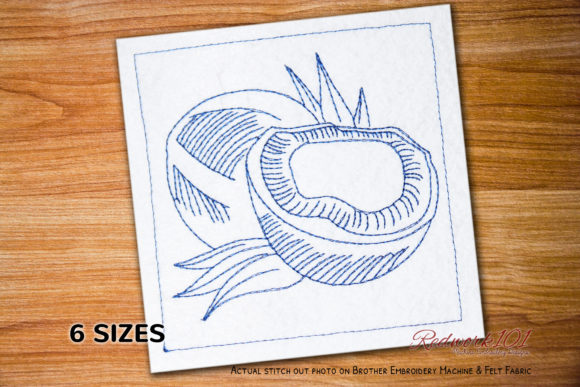
The description notes that "The Box Stitch shown in picture is optional," which is a fantastic feature for a professional designer. This flexibility allows you to adapt the embroidery file to different product shapes. If you are embroidering a round coaster, you might skip the box. If you are framing a piece of art or creating a structured patch, the box adds a nice finished border. Furthermore, the note about the outer box color being different in most designs reminds us that we have creative control over the thread colors. While redwork traditionally uses red, experimenting with deep navy, forest green, or even gold thread could create unique variations for a premium product line.
Critical Considerations for Execution
While this design is robust, there are practical nuances to consider to ensure every commercial embroidery item you sell meets high-quality standards. Since this is an outline design, the clarity of the lines is paramount. Here are some careful-use notes based on real-world testing scenarios:
- Fabric Texture Matters: On highly textured towels or thick canvas, ensure your needle size and thread weight are appropriate. Too thin a thread might get lost in the weave of a rough fabric, reducing the design's impact.
- Stitch Density and Stability: Even though it is redwork, you must use the right stabilizer. On stretchy fabrics like jersey knits for t-shirts, a cut-away stabilizer is essential to prevent the outlines from distorting over time. For woven linens, a tear-away may suffice, but always test first.
- Curved Surfaces: If applying this to a cap, be mindful of the center seam. The leaves and coconut half need to be positioned carefully so the design does not warp around the curve of the hat.
- Scaling Limits: Do not shrink this design too small. Fine details in the leaves or the outline of the coconut half may lose clarity if reduced beyond a certain point. Always check the minimum recommended hoop size relative to the design dimensions.
- Dark Fabrics: Redwork relies on contrast. If you plan to stitch this on dark fabric, ensure you are using a bright, vibrant thread color that pops, or consider using a lighter underlay if the design software allows, though traditional redwork usually assumes light fabric.
Maximizing Value and Brand Consistency
Incorporating the Coconut with Half and Leaves Redwork into your inventory can significantly boost your booth display strength. By using this single design across various items—towels, totes, patches, and pillows—you create a cohesive collection that looks professional and curated. This brand consistency helps buyers visualize how the items would look together in their own homes, often increasing the average transaction value.
From a buyer engagement perspective, the "food" category theme taps into the popular "farmhouse kitchen" aesthetic. Customers love items that feel personal and handmade. The simplicity of the redwork style conveys a sense of artisanal quality that mass-produced goods cannot replicate. It feels premium yet accessible, striking the perfect balance for a successful craft fair product.
Before launching this design into your digital embroidery file shop or using it for commercial embroidery sales, remember to verify the licensing terms. The description hints at optional elements and color variations, but it does not explicitly state the license type. Always confirm commercial licensing before selling finished products to avoid legal issues. Additionally, since exact stitch counts and specific file formats were not detailed in the brief description, it is advisable to download a sample or check the vendor's full specifications to ensure compatibility with your specific machine setup.
Ultimately, the Coconut with Half and Leaves Redwork is a versatile, high-potential asset for any embroidery business. With its clean lines, adaptable layout, and timeless appeal, it stands ready to become a bestseller in your handmade shop. By paying attention to fabric choices, stabilizer selection, and presentation, you can transform this simple design asset into a standout star of your next market event.