Review: National Flag of India Redwork for Real Projects
As an embroidery designer who spends more time staring at stitch maps than most people spend watching television, I am always cautious about new downloads. When I stumbled upon the National Flag of India Redwork on Creative Fabrica, my initial reaction was a mix of curiosity and professional scrutiny. Redwork designs have a specific personality; they rely entirely on line quality and spacing because there is no fill stitch to hide imperfections. For a project intended for commercial use or a heartfelt handmade gift, the design needs to be flawless. Here is my honest evaluation of this file after considering it for real-world application.
First Impressions and Visual Mood
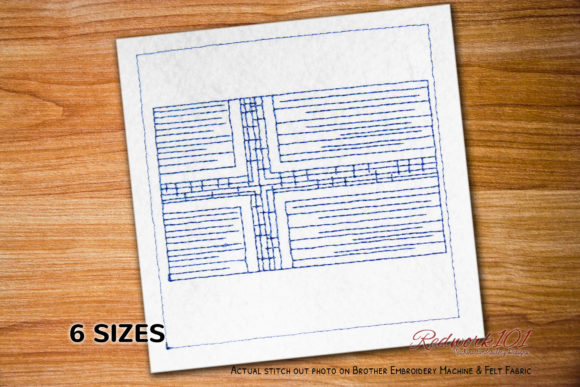
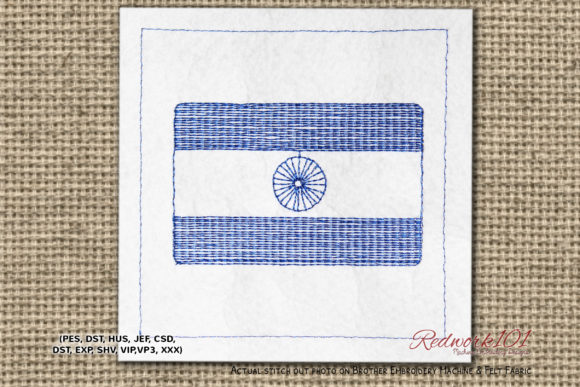
The moment you open the preview for the National Flag of India Redwork, the simplicity strikes you. In a world where dense satin columns and complex 3D puff stitches often dominate, a redwork design offers a breath of fresh air. The visual mood is nostalgic yet crisp, reminiscent of traditional hand-stitched quilting but optimized for modern machines. The lines appear clean, suggesting a well-digitized running stitch path that should minimize thread breaks and jumps.
What stands out immediately is the decorative appeal. Because it lacks heavy fill areas, this embroidery file feels lightweight. It does not overwhelm the fabric. This makes it incredibly versatile for projects where you want the symbol to be present without altering the drape or feel of the material. Whether you are aiming for a rustic aesthetic for a craft fair or a clean, minimalist look for a boutique clothing line, this design fits naturally into those niches.
Performance in Real Embroidery Projects
I mentally ran this design through several potential customer orders to gauge its versatility. For custom apparel, such as a linen button-down shirt or a cotton tote bag, this redwork design is ideal. Heavy fills can make stiff collars or bag handles uncomfortable, but the open nature of redwork keeps the finished product soft and wearable.
Consider sweatshirt embroidery. Often, fleece or French terry fabrics can be tricky with dense designs because the needle perforation creates a hard patch. The National Flag of India Redwork, with its likely lower stitch density, would sit beautifully on a crewneck without creating that dreaded "cardboard" effect. Similarly, for kitchen towels or aprons that require frequent washing, fewer stitches mean less risk of puckering over time and faster wash-and-dry cycles for the end user.
For those selling on Etsy or at local markets, this design shines in the realm of embroidered patches. If you are using a tear-away stabilizer and cutting around the design, the redwork style creates a vintage-inspired patch that appeals to buyers looking for unique, non-mass-produced items. It also works wonderfully for nursery decor, perhaps stitched onto a muslin swaddle or a pillow cover, where safety and softness are paramount for baby items.
Technical Considerations and Fabric Challenges
While the design is promising, a professional review must address the technical hurdles. Redwork is unforgiving. Unlike a fill stitch that can bridge small gaps, running stitches expose every misalignment. If you are stitching this on stretchy fabric like a jersey knit t-shirt, your choice of stabilizer is critical. I would strongly recommend a cut-away stabilizer to prevent the design from distorting as the garment stretches during wear.
Another factor is the hoop size. While redwork designs are often compact, you must confirm the specific dimensions listed on the Creative Fabrica product page. If you plan to place this on a curved surface, such as a baseball cap, ensure the design width fits within your cap frame's limitations. Curved surfaces can cause registration issues if the design is too wide or if the stitch length is too long for the curvature.
Color contrast is another vital element. Since this is a single-color style (typically), it relies heavily on the contrast between the thread and the fabric. On dark fabric, a standard red might get lost unless you opt for a brighter shade or a metallic thread. Conversely, on white linen, a deep crimson creates a striking image. Always test on scrap fabric first. Do not skip this step. Stitch a sample on the exact material you intend to sell to check for pull compensation and thread tension.
Enhancing Product Value and Brand Consistency
Using high-quality assets like the National Flag of India Redwork directly impacts buyer trust. When a customer sees clean, precise lines with no bird nests or skipped stitches, they perceive higher value. This perception allows you to price your handmade product higher than generic, store-bought alternatives. It elevates your brand from a hobbyist to a professional creator.
Furthermore, this design aids in product photography. The simplicity of redwork photographs exceptionally well. It doesn't create harsh shadows like 3D stitching, making it easier to capture clear, engaging images for your online shop or social media. This visual clarity can significantly boost customer engagement and click-through rates.
For Independence Day promotions or cultural celebrations, having a dignified, well-executed flag design is essential. It shows respect for the symbol and attention to detail in your craft. Whether used for a limited edition tote bag design or a personalized gift, the aesthetic consistency helps build a recognizable brand identity.
Practical Notes for Commercial Use
Before launching this design into your commercial embroidery lineup, there are housekeeping tasks to complete. First, verify the licensing terms on the product page. Creative Fabrica licenses vary; some allow unlimited sales of finished physical goods, while others may have restrictions. Ensure you are compliant before listing items for sale.
Check the file formats provided. Ensure you have the correct digital embroidery file for your specific machine brand (PES, DST, EXP, etc.). If the product description mentions optional elements, like the box stitch noted in similar designs, decide early if you will include them. Sometimes simplifying the design further by skipping optional borders yields a cleaner look on smaller items like pockets or cuffs.
Finally, consider the thread colors. While "redwork" implies red, do not feel boxed in. For a subtle, tonal look on a colored garment, try matching the thread closely to the fabric. For a bold statement, use a contrasting color. The flexibility of this machine embroidery design allows for creative experimentation.
In conclusion, the National Flag of India Redwork appears to be a solid addition to any designer's library. Its strength lies in its versatility and timeless aesthetic. By paying attention to stabilizer choices, fabric types, and licensing details, you can transform this simple digital asset into a high-value, tangible product that resonates with customers. It is a reminder that sometimes, the simplest stitches make the strongest statement.