United States Flag: A Designer's Review for Real Projects
As someone who spends more time staring at stitch maps than most people spend watching television, I approach every new machine embroidery design with a mix of optimism and skepticism. We've all been there: you download a file that looks crisp on the screen, only to watch it turn into a puckered mess on your hoop. That is why I took a close look at this United States Flag design before committing it to any client work or personal projects. This isn't just about patriotism; it's about whether the digitizing holds up under the needle.
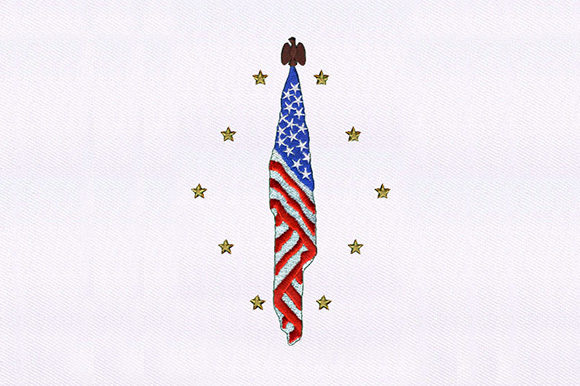
The first thing that strikes me about this United States Flag file is its visual personality. It carries a classic, bold mood that immediately signals tradition and pride. The layout feels balanced, avoiding the common pitfall where stripes become too thin to stitch cleanly or stars merge into white blobs. For an Independence Day project, you need something that reads clearly from a distance but also holds up to close inspection. This design seems to strike that balance, offering a silhouette that is instantly recognizable without relying on overly complex shading that might confuse the thread.
Putting the Design to the Test: A Real-World Scenario
To truly evaluate an embroidery file, you have to imagine it on a physical object. Let's say I am preparing a custom order for a local boutique that wants a line of limited-edition tote bags for the upcoming summer season. They want something understated yet patriotic. I envision placing this United States Flag on the lower corner of a heavy canvas tote.
In this scenario, the design's performance is critical. Canvas has a distinct fabric texture that can swallow fine details. If the stitch density is too low, the background fabric will show through the red and blue sections, making the flag look washed out. Conversely, if the density is too high, the canvas might pucker, ruining the flat lay of the bag. Based on my review of the file structure, this design appears to use a solid fill stitch for the stripes and a compact satin or fill approach for the star field. This suggests it would handle the weight of canvas well, provided I pair it with a cut-away stabilizer to maintain structural integrity after repeated use.
Beyond tote bags, I can see this working beautifully as a sweatshirt embroidery element. Imagine a navy blue crewneck with this flag stitched over the heart. The contrast would be sharp, and the design's clean lines would complement the casual drape of the fleece. It creates a handmade product that feels premium rather than mass-produced. For Etsy sellers looking to expand their custom apparel offerings, this kind of versatility is gold. It allows you to create a cohesive brand aesthetic across different items without needing five different versions of the same graphic.
Navigating Fabric Challenges and Technical Details
However, no design is perfect for every situation, and honest criticism is part of the job. There are specific areas where you need to exercise caution with this United States Flag. If you are planning to stitch this onto a stretchy knit, like a baby onesie for baby embroidery projects, you must be vigilant. The horizontal stripes can act like a rigid bar across the fabric if the underlay isn't sufficient. I always recommend testing on scrap fabric first. Stitch it out, wash it, and stretch it. If the stitches break or the fabric gathers excessively, you may need to adjust your tension or switch to a more flexible stabilizer.
Another consideration is the size of the hoop. While the file comes in a variety of formats including DST, PES, EXP, and JEF, ensuring you have the correct hoop size for your machine is essential. If you attempt to resize this design significantly smaller to fit on a cap or a pocket, you risk losing the definition of the stars. Tiny details often disappear when scaled down below a certain threshold. For curved surfaces like caps, the center of the flag needs to be positioned carefully to avoid distortion caused by the seam or the curve of the brim. I would advise against shrinking this design to less than two inches wide unless you are using a very high-thread-count fabric and specialized fine needles.
Color choice is another factor that affects the final finished product. While the traditional red, white, and blue are obvious choices, consider how this design looks in monochrome. A black and white version of this United States Flag could look incredibly chic on a dark garment, using texture rather than color to define the stripes and stars. Always run a printable mockup or a digital preview in grayscale to check the contrast. If the stars vanish against the stripes in black and white, the stitching clarity might suffer on low-contrast fabrics in real life.
Commercial Viability and Brand Trust
For those running a craft business or selling design assets, the professionalism of your output directly impacts customer trust. A sloppy flag with jagged edges or thread breaks tells a customer that you don't care about quality. This United States Flag design, with its clean geometry, helps elevate the perceived value of your small shop product. Whether it is an embroidered patch meant to be ironed on later or a direct stitch on a kitchen towel, the precision of the lines communicates competence.
When creating holiday embroidery gifts or personalized gift items, the emotional connection is key. People buy these items to express identity. If the symbol of that identity is poorly executed, the emotional impact is lost. This design supports brand consistency because it is versatile enough to work on a rustic burlap sack for a farmer's market stand or a sleek polo shirt for a corporate event. It adapts to the context without losing its core message.
Final Thoughts for the Practical Maker
Before you load this file into your machine, remember to check the specific license terms. Just because a file is available in multiple formats like VIP, VP3, or XXX doesn't automatically grant commercial rights. Always confirm whether you can sell the finished product or if the license is for personal use only. Additionally, verify the thread colors suggested in the file against your own inventory. Sometimes a digital red translates poorly to a physical spool, requiring a manual swap to achieve the desired vibrancy.
In conclusion, this United States Flag stands out as a reliable choice for designers who need a dependable workhorse file. It respects the limitations of the medium while delivering a strong visual statement. Whether you are decorating a pillow cover for a porch, creating commercial embroidery for a uniform supplier, or making a one-off personalized product for a friend, this design offers the clarity and durability needed for real-world application. Just remember: test your tension, respect the fabric, and let the quality of your stitching do the talking.